Why Dharampur Could Become Himachal Pradesh’s Next Destination Hotspot
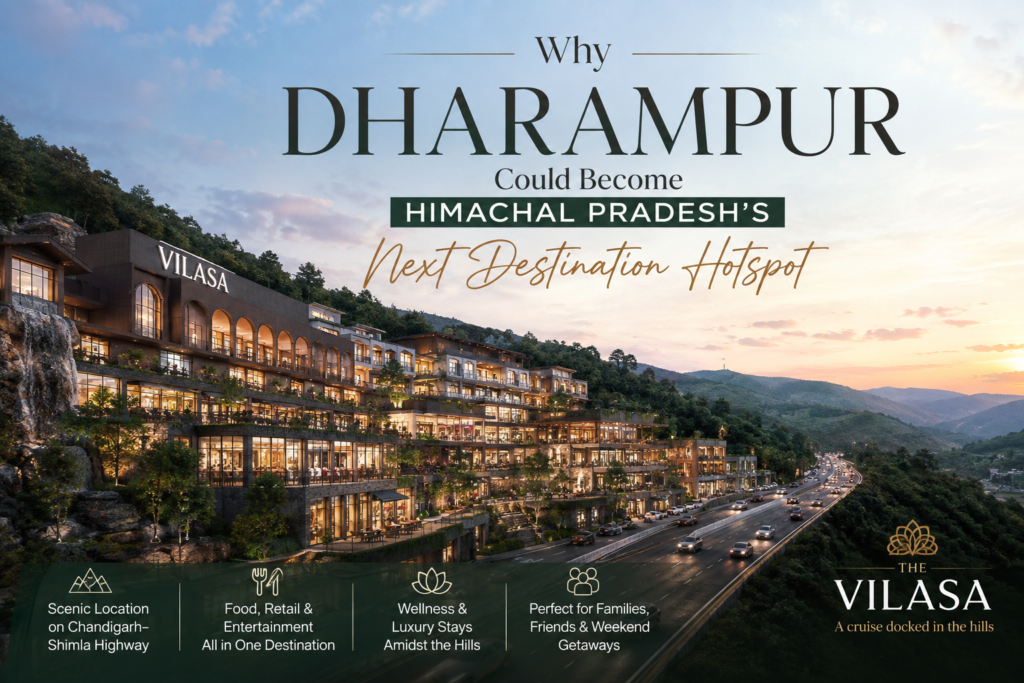
Himachal Pradesh has always been associated with mountain escapes, scenic drives and weekend retreats. But as travel habits evolve, visitors are increasingly looking for more than a destination with a view.
They want places where they can eat, shop, relax, experience, stay and spend an entire day — or an entire weekend — without constantly moving from one location to another.
This is where Dharampur is beginning to stand out.
Located along the Chandigarh–Shimla National Highway, Dharampur sits within an important travel corridor connecting Chandigarh with the hills of Himachal Pradesh. Its location, natural setting and growing potential for hospitality and leisure make it an interesting destination to watch.
And the next phase of development could be about creating destinations rather than simply building properties.
Dharampur: Where the Journey Meets the Hills
The Chandigarh–Shimla route is more than a road connecting two cities. It is one of the important gateways into Himachal Pradesh.
Travellers moving from Chandigarh towards Shimla pass through a landscape that gradually transforms from the plains into the hills. Dharampur occupies an interesting position within this journey — close enough to the Chandigarh region for weekend visitors while already offering the character of the Himalayan foothills.
This creates an opportunity for a different kind of destination.
Instead of asking visitors to travel deep into the mountains, the idea is to create an experience where the journey itself becomes part of the destination.
The Rise of Experiential Destinations
Traditional commercial developments are often built around one primary purpose.
A shopping centre focuses on retail.
A restaurant focuses on dining.
A hotel focuses on accommodation.
An entertainment centre focuses on leisure.
But modern travellers increasingly expect experiences that combine several of these elements.
A destination can therefore become more valuable when different experiences complement one another.
Imagine beginning the day with coffee, spending time exploring retail spaces, having lunch with family, enjoying an activity, moving into an evening dining experience and eventually staying overnight.
The objective is not simply to attract visitors.
It is to give them reasons to stay longer.
What Makes a Destination Different?
A successful destination is rarely defined by one attraction.
It is defined by the combination of experiences.
Food brings people in.
Retail gives them another reason to explore.
Entertainment keeps families engaged.
Wellness provides a slower, more personal experience.
Hospitality extends the visit beyond a few hours.
Together, these elements can create a destination ecosystem.
This is the thinking behind Vilasa, a destination commercial retreat being developed in Dharampur.
Spread across 1.75 acres, Vilasa is planned around retail, food and beverage, leisure, wellness and hospitality rather than a single commercial anchor.
Eight Experiences. One Destination.
Vilasa has been planned around eight curated zones.
1. International Food Court
Food is often the first reason people stop during a highway journey.
Vilasa’s International Food Court is planned around a mix of quick-service, dessert and beverage experiences, creating an accessible entry point for visitors.
The intention is simple: make stopping part of the journey.
2. International Multi-Brand Outlet
Retail adds another layer to the destination experience.
Instead of travelling to different locations for fashion, lifestyle and consumer brands, a multi-brand environment can bring several categories together under one roof.
For travellers, it creates another reason to stop.
3. Play Zone
Family travel requires experiences for different age groups.
The planned Play Zone is designed as a multi-age leisure environment — from children to older family members.
This is important because family destinations are not built around a single visitor.
They are built around the group.
4. Fine-Dine Restaurant
As the day moves towards evening, the experience shifts from quick visits to longer stays.
The planned Fine-Dine Restaurant is positioned as an occasion-driven hospitality experience — a place designed around evenings, celebrations and destination dining.
5. Social Dining
Vilasa also introduces a dedicated social-dining concept known as “The Woid.”
The idea is to create an environment for groups, gatherings and corporate evenings.
This moves the destination beyond individual travellers and families towards organised social experiences.
6. Adventure Zone
A destination needs reasons to return.
The planned Adventure Zone is designed around high-engagement experiences that can extend visitor activity across different seasons.
Rather than simply looking at the hills, visitors can have something to actively participate in.
7. Wellness
Travel can be exciting, but it can also be tiring.
The planned Nomadic Massage Center introduces a wellness component to the destination.
For highway travellers and weekend visitors, wellness can become another reason to pause, recover and spend more time at the destination.
8. Ultra-Luxury Stays
The final part of the destination loop is accommodation.
Once dining, retail, leisure and wellness are combined with premium stays, the experience no longer has to end after a few hours.
A day trip can potentially become a weekend escape.
From Highway Stop to Destination
This is perhaps the most interesting idea behind the Vilasa concept.
A highway location is traditionally associated with convenience.
You stop for fuel.
You stop for food.
You continue your journey.
But what if the stop itself becomes the reason to slow down?
That changes the relationship between the road and the destination.
Instead of being simply “on the way to Shimla,” a place can become “a place worth stopping for.”
This distinction is important for the future of experiential commercial development in highway corridors.
Why Location Matters
Vilasa is positioned on the Chandigarh–Shimla National Highway in Dharampur, Himachal Pradesh, with direct corridor frontage.
For a destination combining retail, F&B, leisure and hospitality, accessibility is critical.
A destination cannot rely entirely on people travelling specifically to visit it.
It needs to benefit from existing movement.
Highway corridors provide exactly that opportunity: a continuous flow of travellers, weekend visitors, families and tourists moving between cities and destinations.
The challenge is then to transform passing traffic into destination traffic.
A New Way of Thinking About Hill Destinations
Himachal Pradesh has traditionally been known for resorts, hotels, homestays and standalone restaurants.
The next evolution could be more integrated.
Instead of one hotel surrounded by a few facilities, destinations can combine:
Food + Retail + Leisure + Wellness + Hospitality
into one experience.
This creates multiple reasons for people to visit and multiple ways for them to spend time there.
That is the larger idea behind destination development.
Building for the Entire Day
The strongest destinations are not dependent on a single time of day.
Morning coffee.
Afternoon family activities.
Shopping during the day.
Evening dining.
Night-time hospitality.
Overnight stays.
Each experience supports another.
Vilasa’s eight-zone strategy has been designed around this principle — creating a destination capable of engaging visitors throughout the day and across different seasons.
The Future of Dharampur
Dharampur’s significance may ultimately come from more than its geography.
Its position on the Chandigarh–Shimla corridor gives it the opportunity to become a meeting point between urban convenience and the Himalayan experience.
As travellers increasingly value experiences over simply reaching a destination, places that combine accessibility, design, hospitality, dining and leisure may become increasingly relevant.
Vilasa is being developed around precisely this idea.
A place where the road meets the hills.
Where a stop can become an experience.
And where the journey can become part of the destination.
Vilasa — a cruise docked in the hills.
Vilasa is a destination commercial project in Dharampur, Himachal Pradesh, developed by Vamika Builders. The project is currently rising soon, with zoning defined and RERA registration in process. Project specifications, zoning and proposed facilities remain subject to applicable approvals and may change
Enquire about Vilasa
Interested in a site visit, the master plan, or the eight-zone lease deck? Send a note and a named person at Vamika replies within one business day.